
How to Search Cass County Court Records
Cass County court records are searched through MiCOURT Case Search, the statewide case lookup run by the Michigan courts. The tool is free. It pulls civil, traffic, criminal, domestic, and probate cases into one entry point. Still, not every file appears there. State and federal law keep some case data out of public view, so a clean search can still miss sealed or juvenile matters.
The local court also splits its lookups by court type. District court holds traffic, misdemeanors, and small claims. Circuit court holds felonies, family law, and larger civil suits. Probate court holds estates and guardianships. Before you start, have a full party name or a case number ready. A date of birth helps narrow common names.
The Michigan courts publish the MiCOURT Case Search landing page as the front door for statewide lookups.
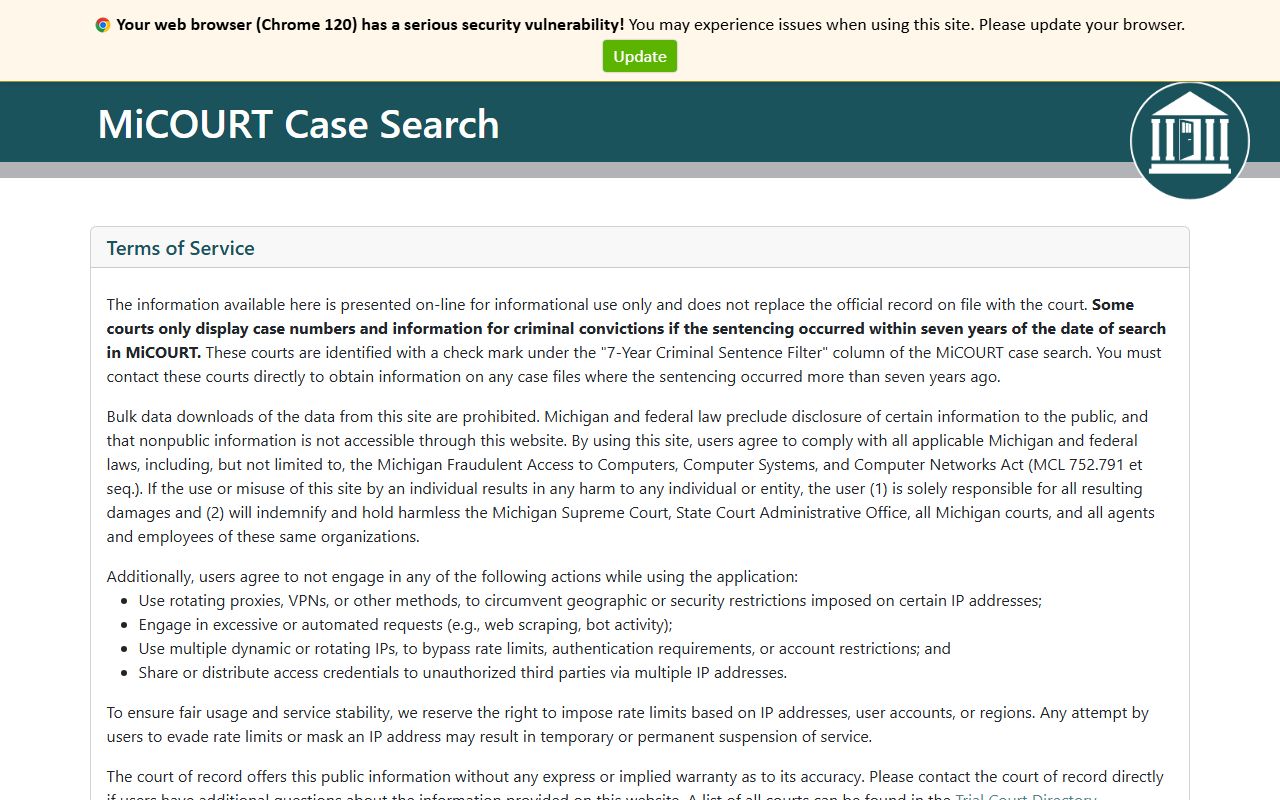
From that screen a resident can search by party name, case number, or attorney, then open the matching Cass County file. The steps below map the fastest path for each record type.
- Open MiCOURT Case Search when you need a statewide, multi-court entry point.
- Pick the right court when you know the type: district for traffic and misdemeanors, circuit for felonies and family, probate for estates.
- Enter a party name, case number, or attorney name, then submit the search.
- For traffic tickets, switch to the Michigan ePAY ticket search or the district court pay-tix page.
- For older or non-digitized files, call or visit the matching file room or the clerk and register office.
Cass County Court Records Search Fields
The MiCOURT search screen keeps its fields simple. You do not need every box filled. A party name alone often returns a hit, and a case number pulls a single file. Attorneys can be found by name or bar number, which helps when you know the lawyer but not the parties. A lower court or appellate court dropdown narrows the search when a case has moved up the ladder.
The Michigan courts also run a public case search page that explains the access notice before you begin.
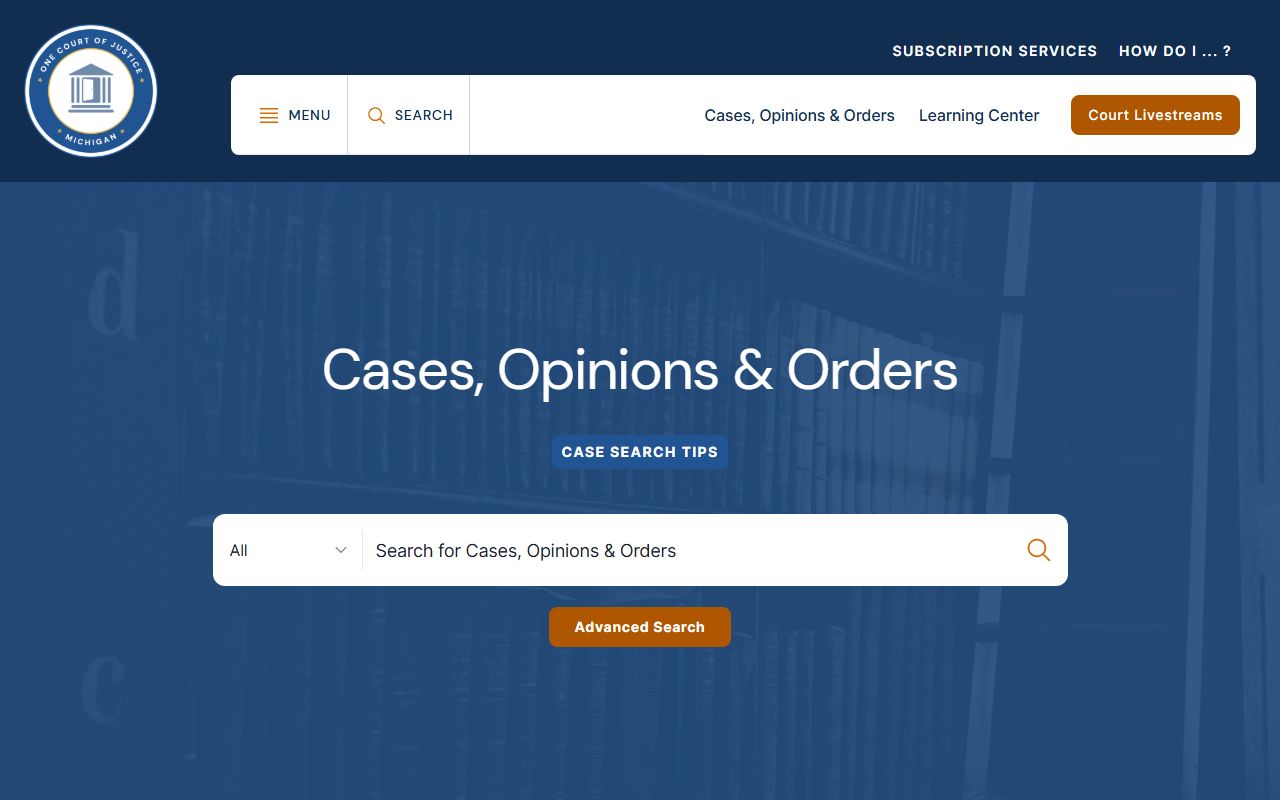
That notice warns that certain records stay hidden, which is why some Cass County court records will not surface online. The table lists the fields the portal accepts.
| Field Label | Type | Required | Notes / Format |
|---|---|---|---|
| Case Number | Text | No | Pulls a single file when you know it. |
| Party Name | Text | No | Search by plaintiff, defendant, or petitioner. |
| Attorney Name | Text | No | Find cases tied to a named lawyer. |
| Bar Number | Text | No | Attorney lookup by license number. |
| Lower Court | Dropdown | No | Filter to a trial court such as district or circuit. |
| Appellate Court | Dropdown | No | Filter to a higher court on appeal. |
| Advanced Search | Control | No | Expands added filters. |
| Submit Search | Button | Yes | Runs the query. |
Traffic tickets use a separate tool. The Michigan ePAY portal asks for a county, a court, and then a last name paired with a ticket number, a date of birth, a driver license number, or a plate number.
Types of Cass County Court Records
The public record set in Cass County follows the court structure. Each court owns its own slice, so the record type points you to the right door. Civil suits, criminal cases, traffic tickets, family matters, probate files, and appeals all show up in the county system. The court that heard the case is the court that keeps the file.
District court records cover the front end of most cases. The district live docket is a good example of how the county displays that activity.
The Cass County district court live docket shows scheduled hearings for the day.
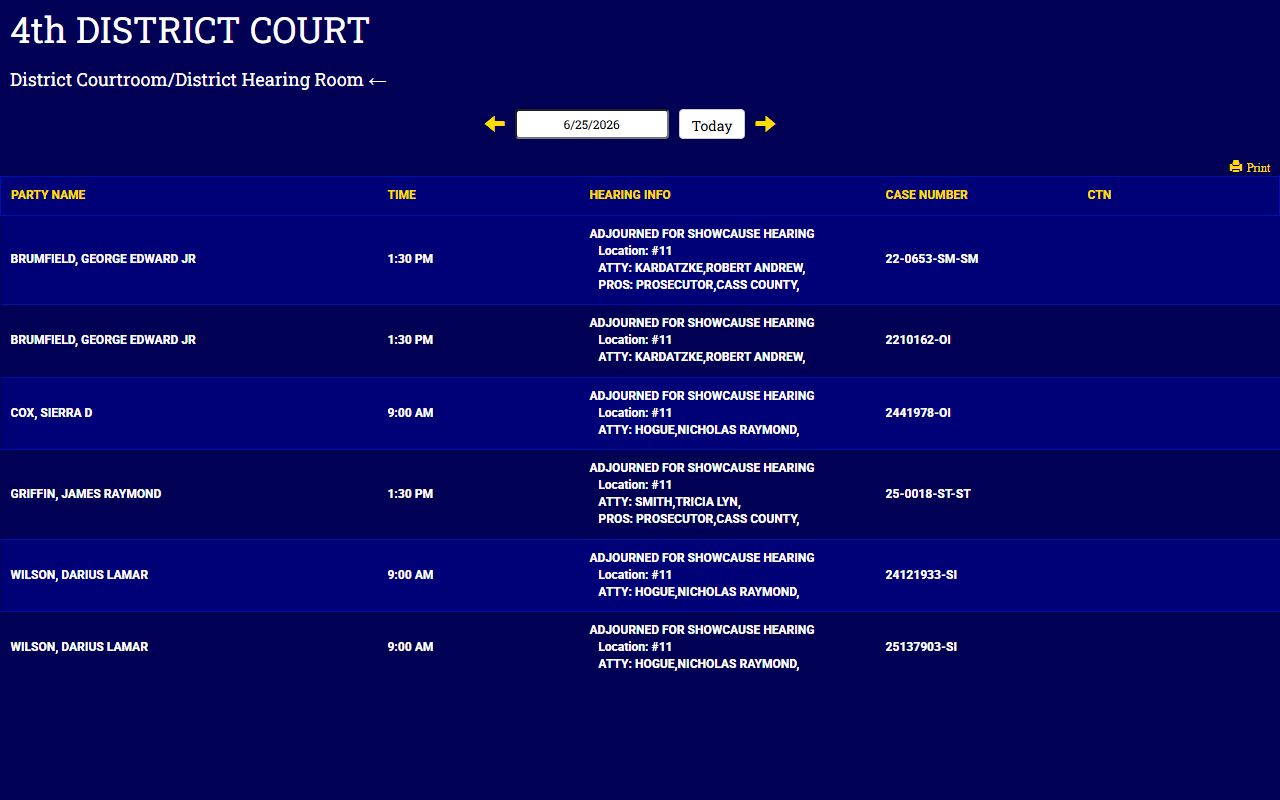
That page proves how event-driven the district record is, listing hearings by party and time. The main record types break down like this.
- Civil records: district claims up to $25,000 and circuit actions of $25,000 or more.
- Criminal records: misdemeanors in district court, with felonies continuing in circuit court after bindover.
- Traffic records: district court citations, kept apart from the state driving abstract.
- Family records: divorce, custody, support, and paternity handled by the circuit court.
- Probate records: estates, wills, guardianships, conservatorships, and mental health matters.
- Juvenile records: restricted files kept in the circuit court juvenile division.
What Cass County Court Records Show
Cass County files use standard Michigan court data fields. The county live docket pages show the ones you will meet most. A district docket line lists the party name, the time, the hearing info, the case number, and the CTN, plus a court room and a location number. That layout is built around events, not just a case summary. A reader sees the next step in a case, not only its title.
The Cass County circuit and probate live docket uses the same event-driven format.
Between the docket and the case file, most Cass County court records surface the fields listed below. Keep in mind that public records are not always complete records, since redacted data is removed by rule.
| Field | What It Shows |
|---|---|
| Case Number | The unique court file identifier, often prefixed by type such as CR, CV, FM, or PR. |
| Party Names | Plaintiff, defendant, petitioner, or respondent listed on the case. |
| Filing Date | The date the action was opened. |
| Hearing Details | Time, court room, and event description on the live docket. |
| Charge or Count | Statute or count label in criminal and traffic matters. |
| Bond or Financial Entries | Bail, fees, or restitution in criminal and traffic files. |
| Disposition | How the case ended, such as dismissed, guilty plea, or judgment. |
| Case Status | Open, pending, closed, disposed, or sealed. |
Docket lines and full case files are not the same thing. A running list of hearings and orders sits in the Cass County court dockets, while the deeper file holds the actual motions and judgments.
Public Access Framework for Cass County Court Records
Michigan access law blends three parts: the state open-records act, court rules, and record-specific statutes. The state Freedom of Information Act governs county public records in general. Its definition section excludes the judiciary from the term public body. Cass County itself points this out, noting the county clerk acting as clerk to the circuit court is not a public body under FOIA. So court files are not handled like ordinary county FOIA records.
Court records instead run under the Michigan court rules. MCR 8.119 defines what counts as a court record and sets the public-access and sealing standards, and MCR 1.109 supports the redaction rules that strip sensitive data before release. For county administrative records that do fall under FOIA, the fee section allows reasonable search and copy charges.
The Michigan courts explain how files are kept and released on a dedicated page.
The state records management page describes how trial courts store and manage their files.
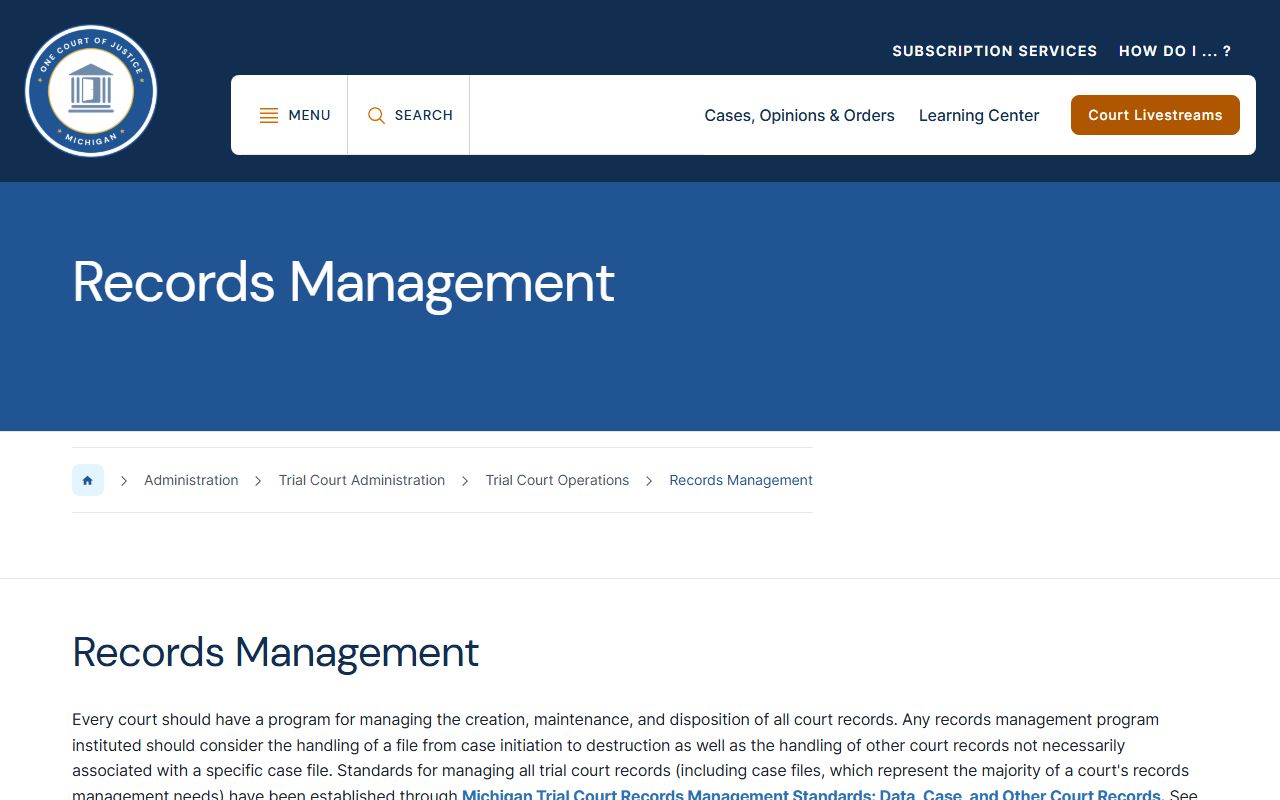
That page backs up the split: county administrative records go through FOIA, while court case files go through the court file room or the online case search.
Note: Because the judiciary is exempt from FOIA, use MiCOURT or the court file room for case files rather than filing a county FOIA request.
Records That Are Sealed or Confidential in Cass County
A public docket does not mean every record is open. The categories most readers run into are juvenile records, sealed records, expunged records, adoption files, and mental health proceedings. Juvenile files carry the strongest shield. Under MCL 712A.28, juvenile records are kept by the court and opened only by court order, and a confidential social file stays closed to all but those with a legitimate interest.
Sealed and expunged files work differently from ordinary records. Michigan's expungement statute lets a court set aside a conviction, which changes what the public later sees. Some convictions clear on their own under the automatic set-aside rule, though not every case qualifies. Adoption and mental health matters, both handled in probate, can be partly closed because of the personal data involved.
The court rule that governs sealing sits in the Michigan court rules book.
Chapter 8 of the Michigan court rules holds MCR 8.119, the sealing and access rule.
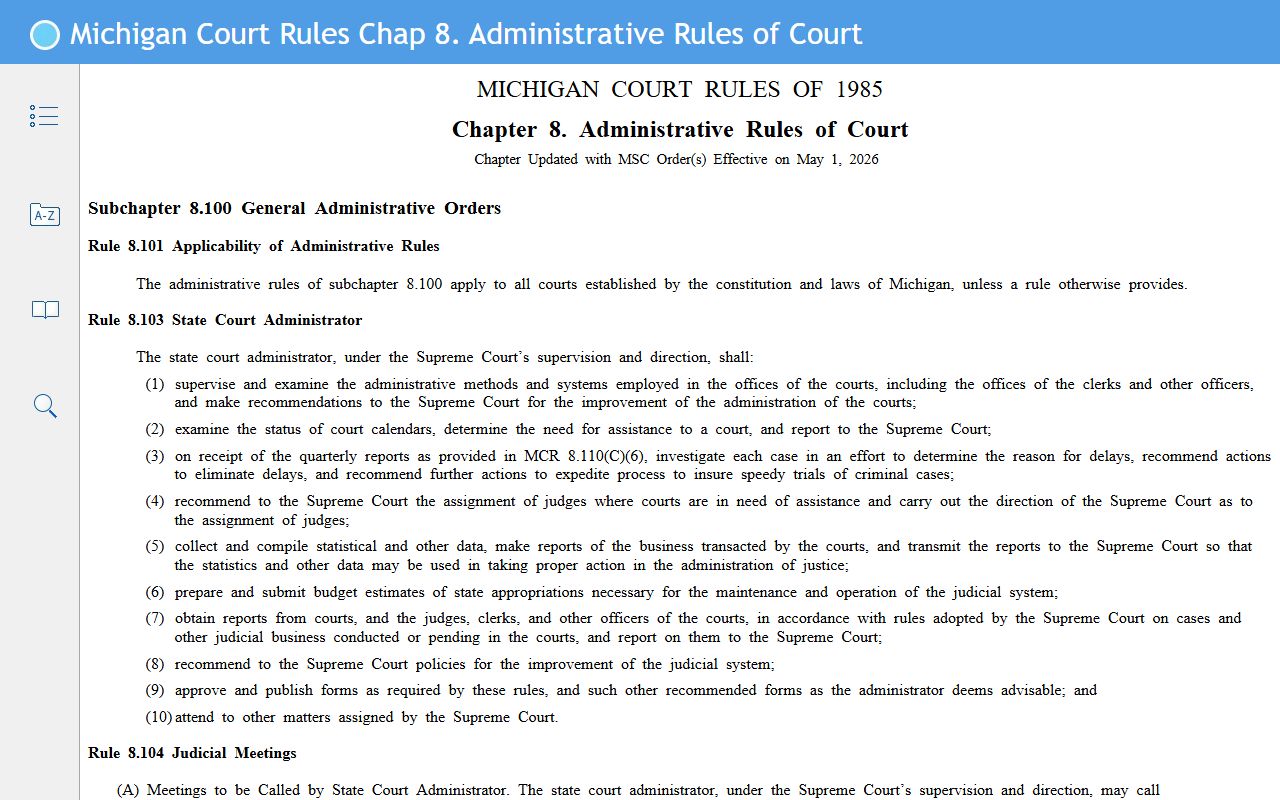
To view a sealed file, a person usually must file a motion in the court that sealed it and show a legal reason. The court decides whether to grant access.
In-Person Court Record Requests
When a file is old or not online, the county clerk and register office is the records hub. The office keeps the circuit court and family court files and issues certified copies of vital records. Bring a photo ID such as a driver license, passport, or state ID. Payment can be cash, credit card, a personal check, or a money order made out to Cass County Clerk Register. The district court runs its own file room, so a district case may route you there instead.
The Cass County clerk and register office can also look up the latest deed on a property, though it cannot run a full title search. Public workstation deed searches are free, while prints cost $1 per page.
Cass County Clerk/Register of Deeds Office
120 N Broadway, Suite 200
Cassopolis, MI 49031
269-445-4464
Mon to Fri 8:00 AM to 5:00 PM, closed noon to 1:00 PM